As online reviews continue to support consumers when engaging with businesses, research published by the Coalition for Trusted Reviews (CfTR) has revealed growing concerns around fake reviews and how they affect purchasing decisions.
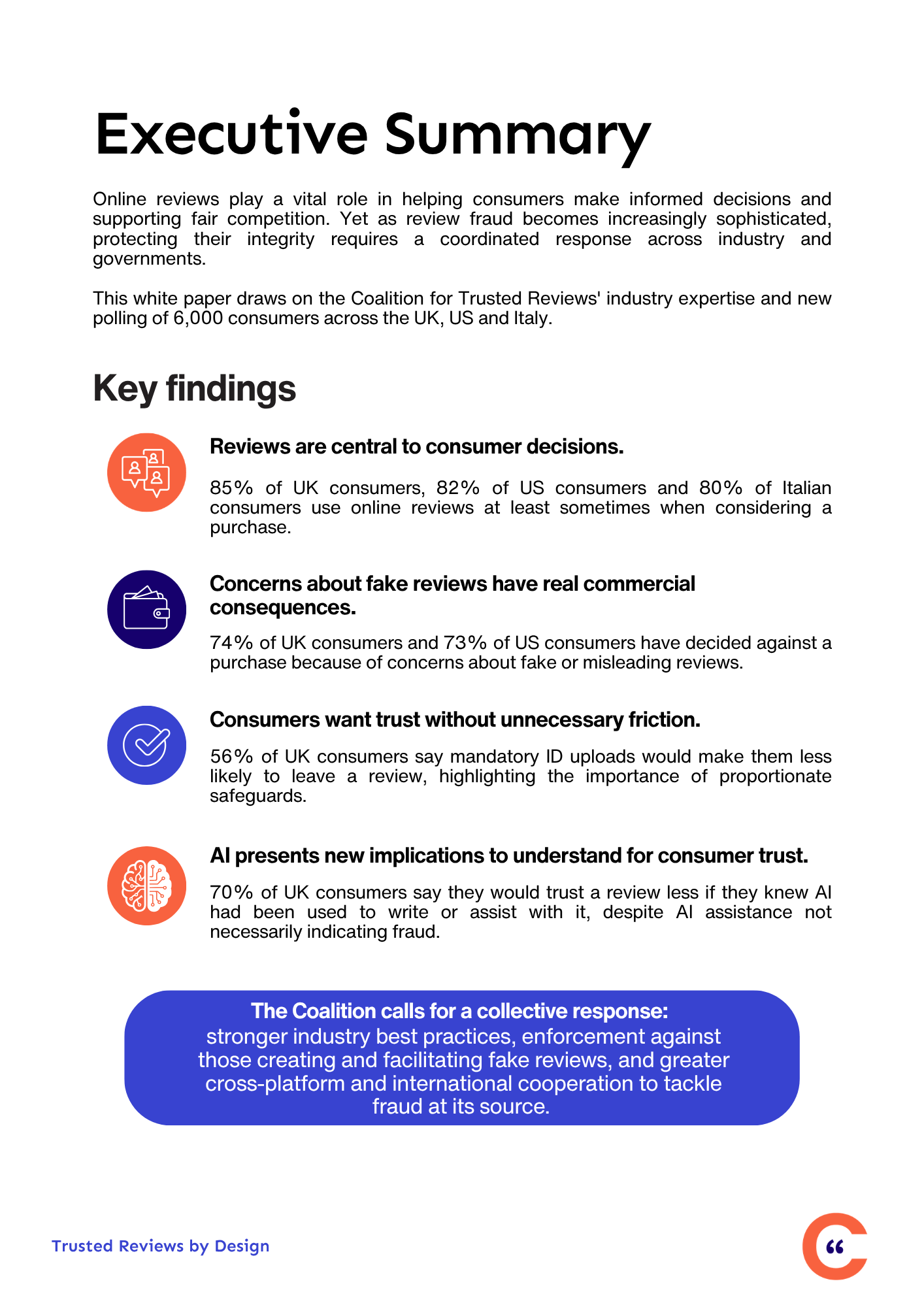
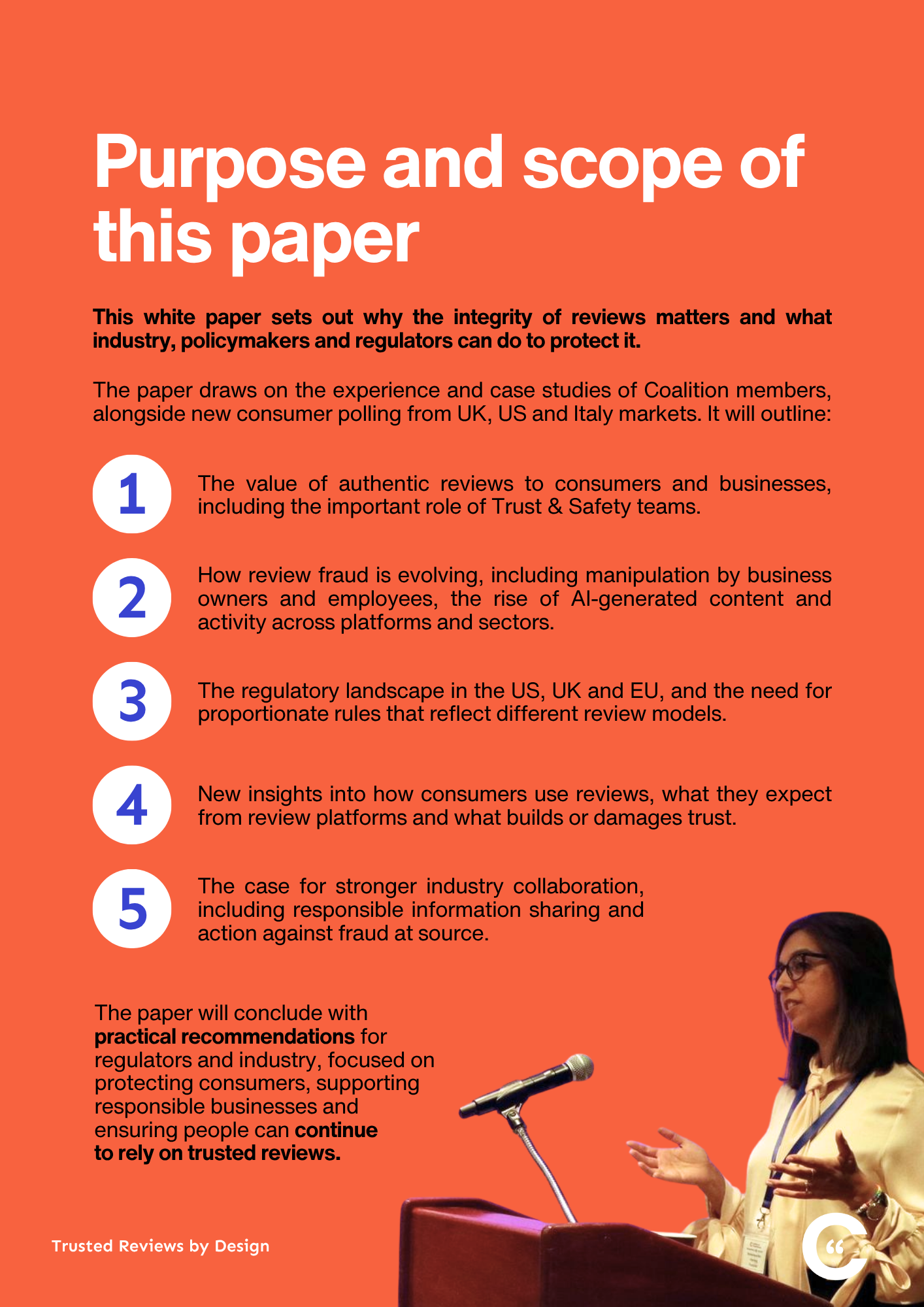
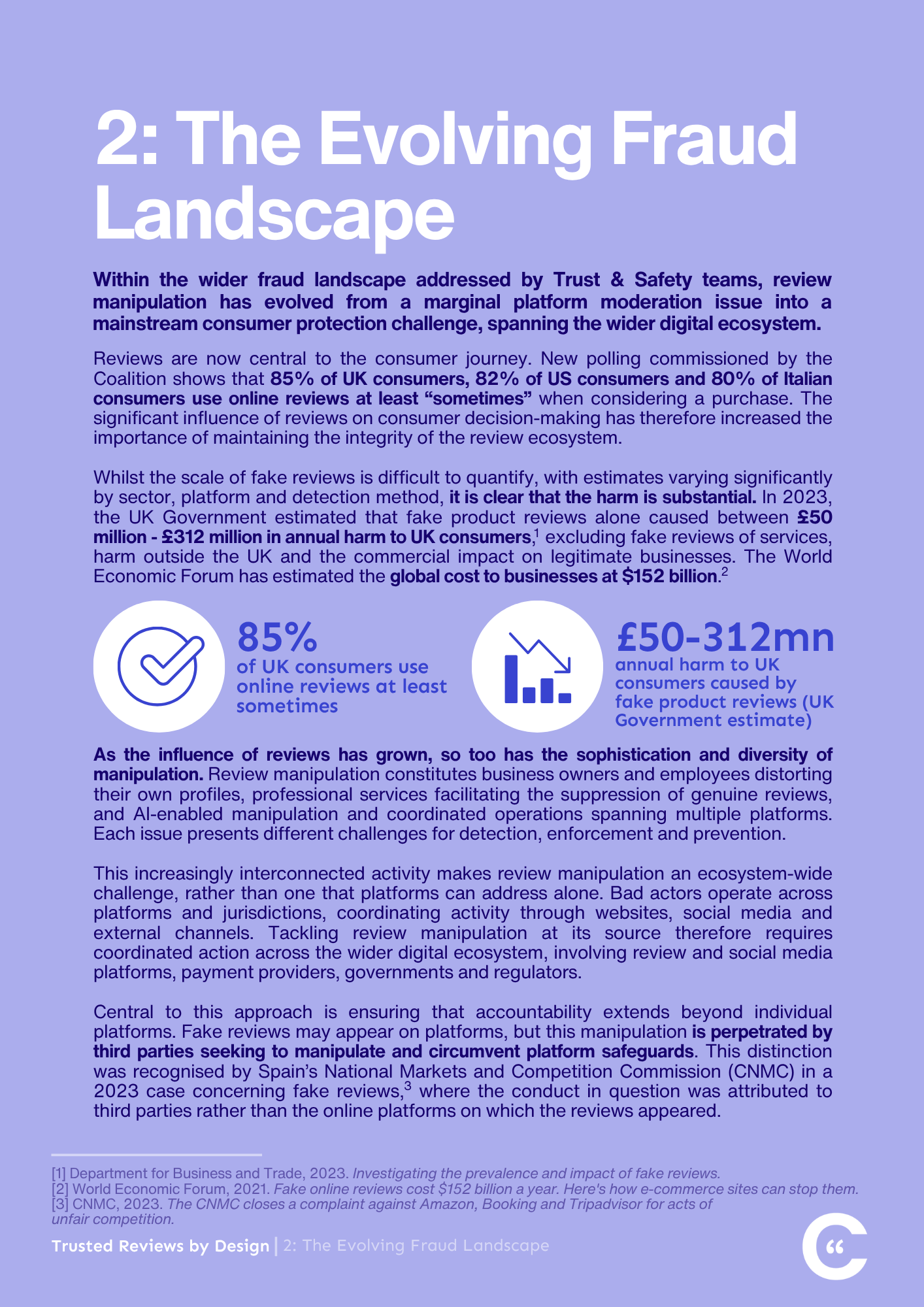
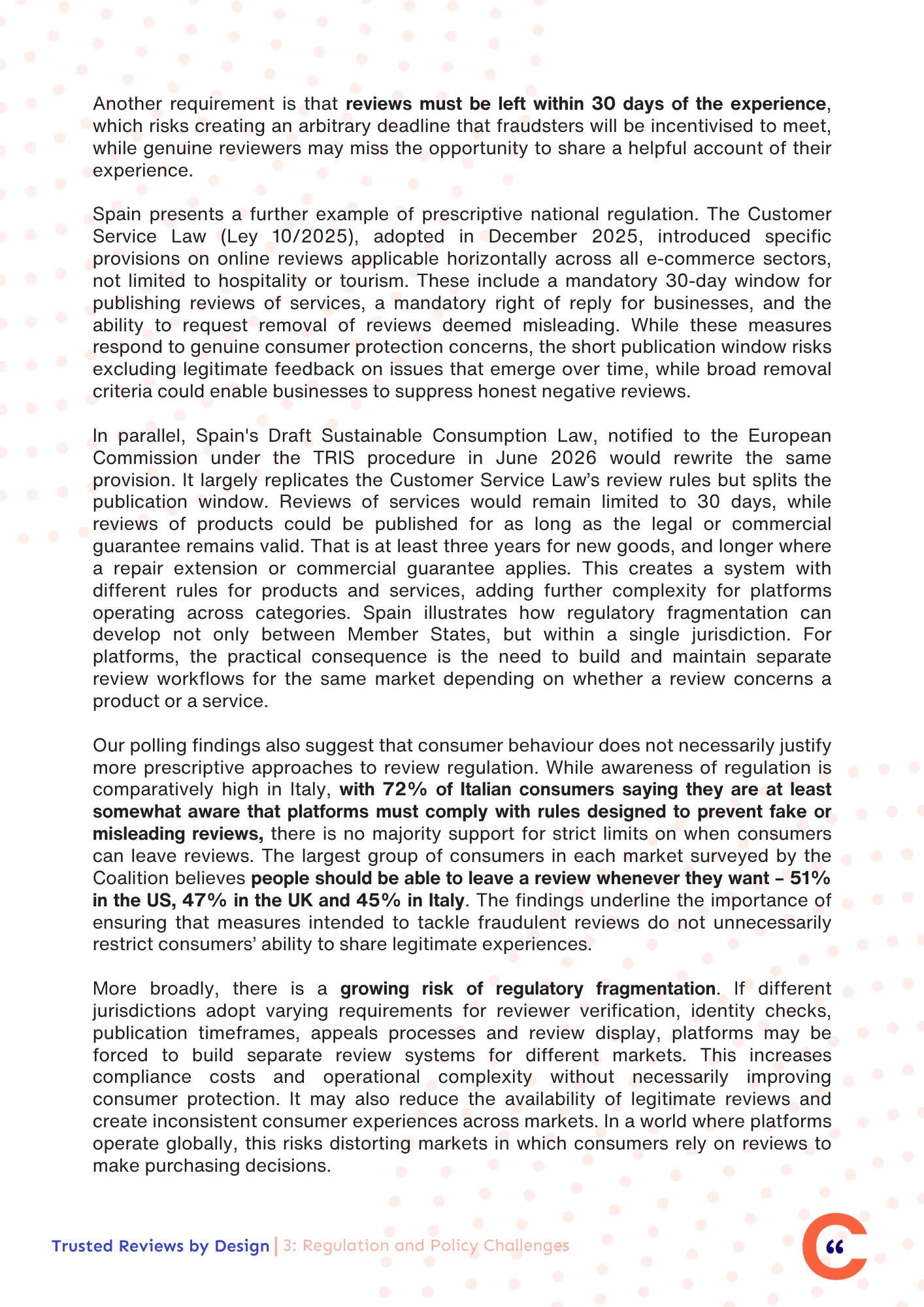
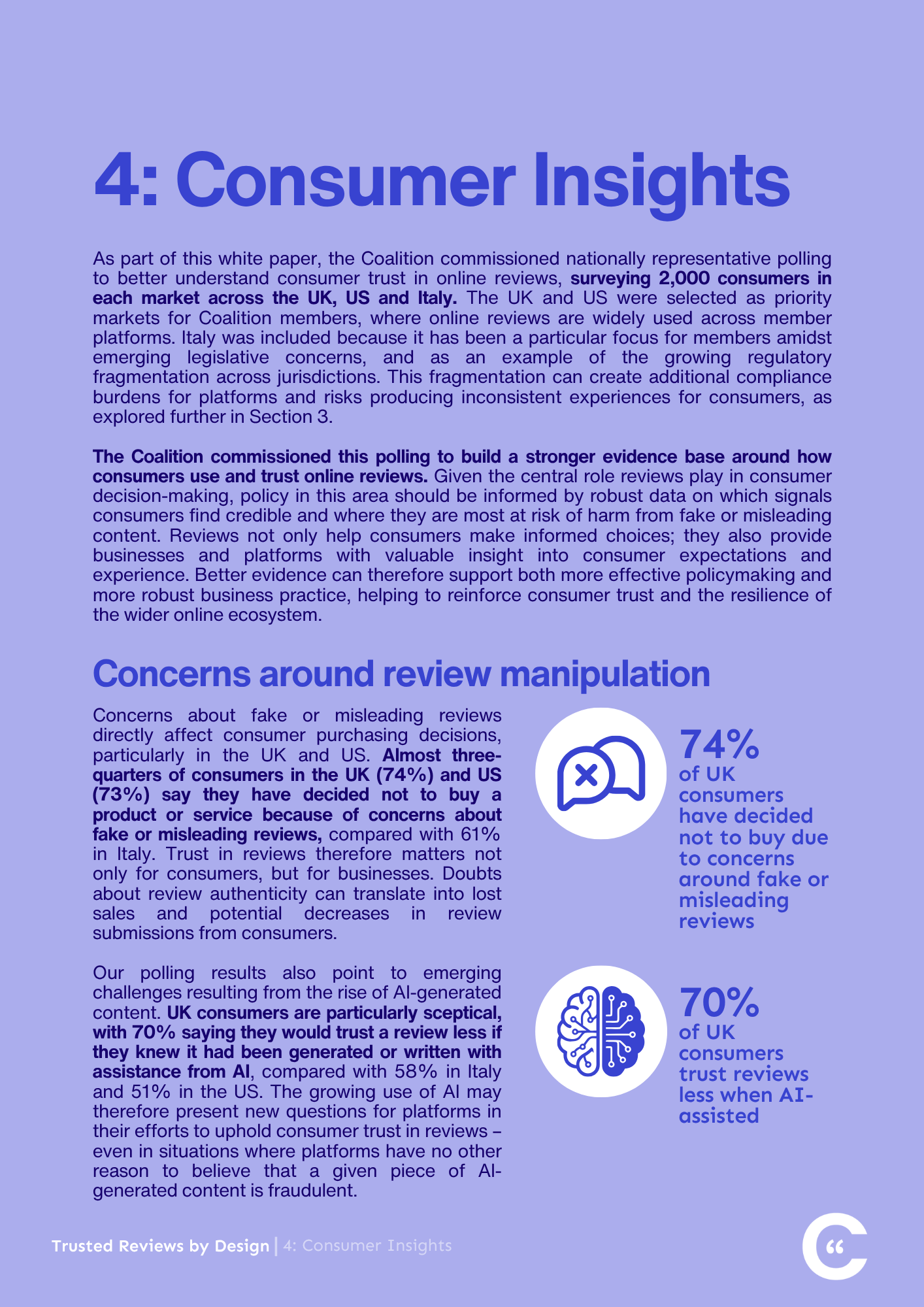
Commissioned by the CfTR this year, the research highlights tension between the growing value of online reviews and the impact of fake and misleading content. While eight in ten consumers in the UK (85%), US (82%), and Italy (80%) use online reviews at least sometimes when considering a purchase, 74% of UK consumers, 73% of US consumers and 61% of Italian consumers have decided not to purchase a product or service due to concerns about fake or misleading reviews.
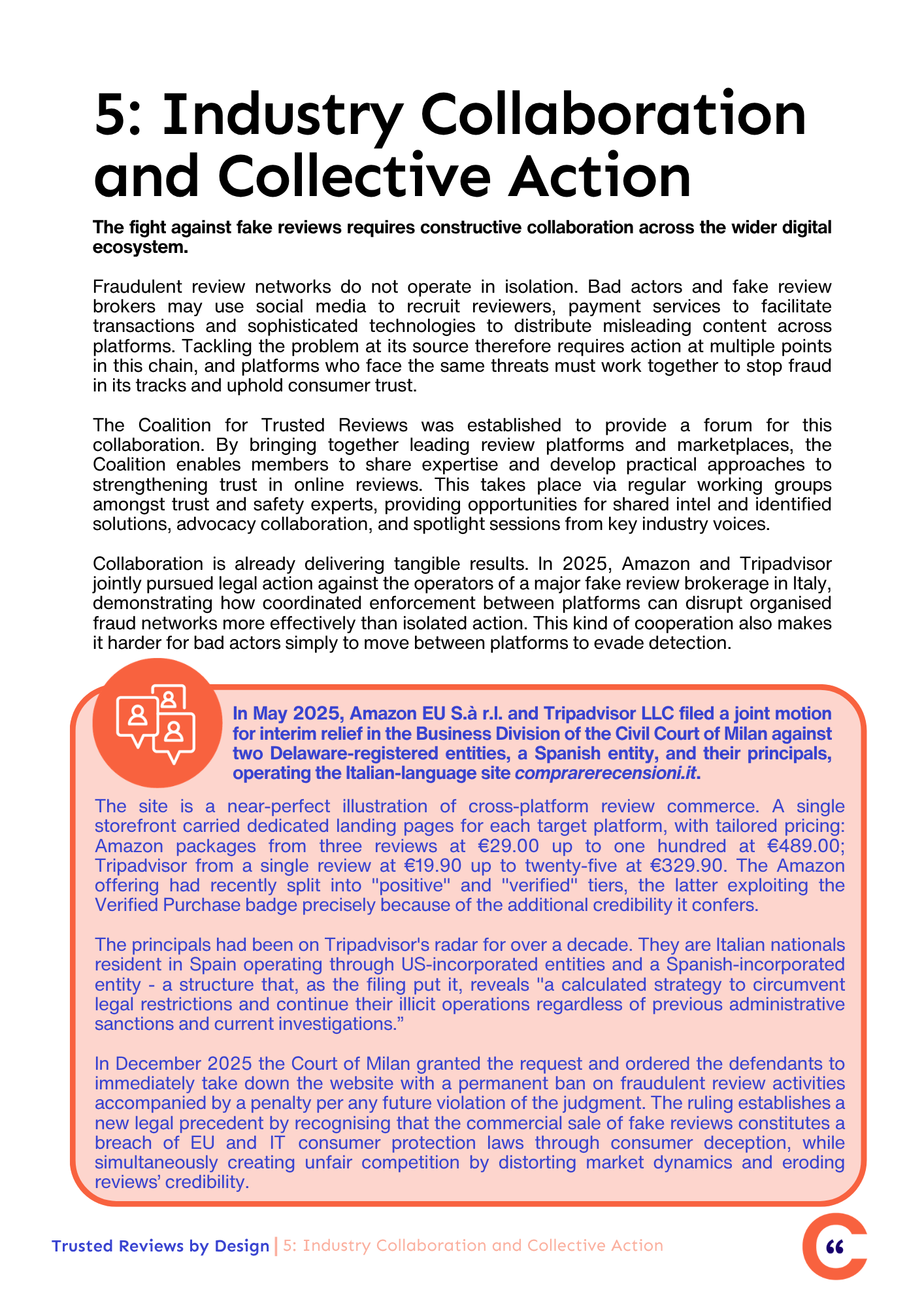
The findings form part of a new white paper from CfTR, the global alliance bringing together Amazon, Booking.com, Expedia Group, G2, Holidaycheck, Tripadvisor and Trustpilot to protect the integrity of reviews.
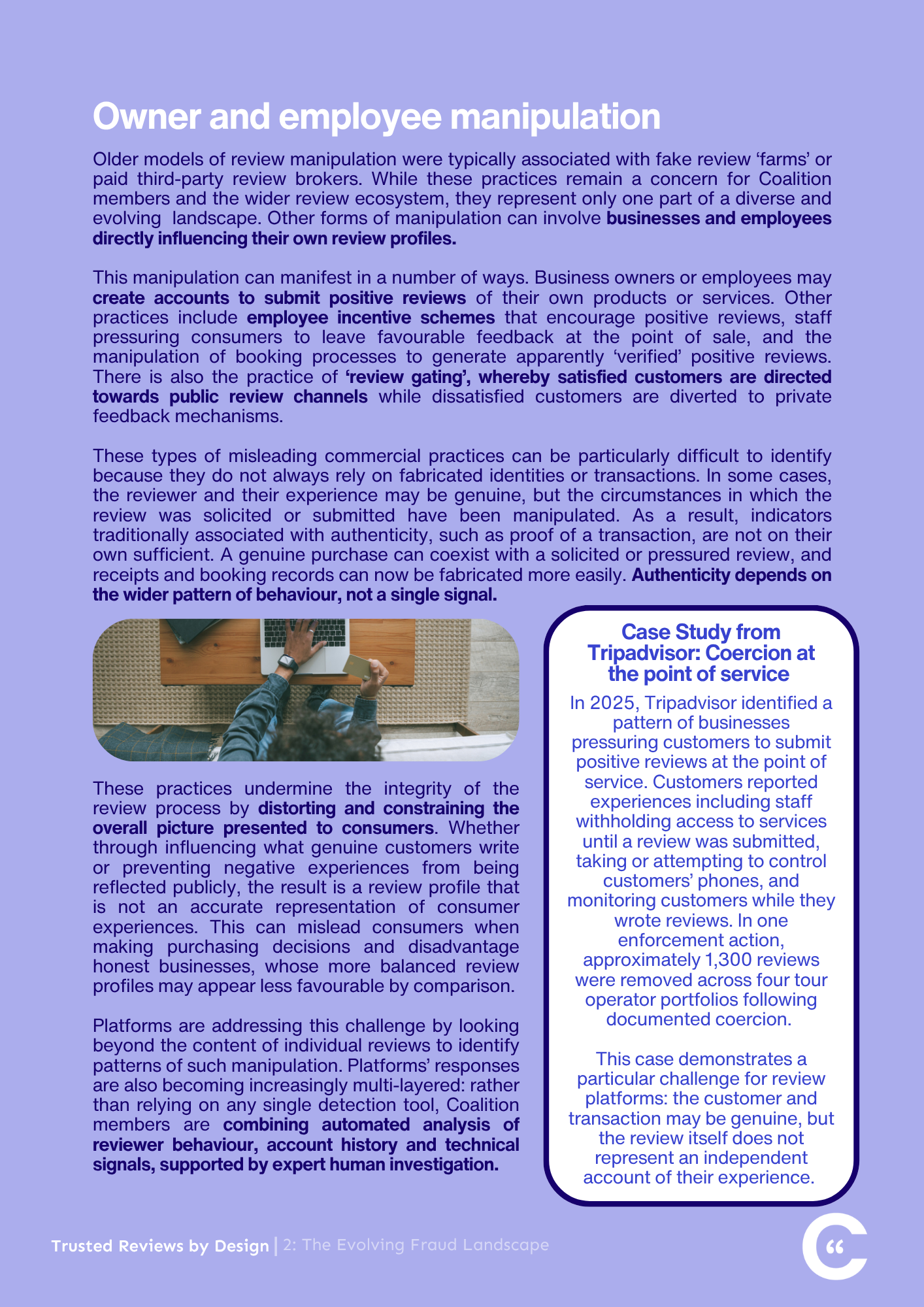
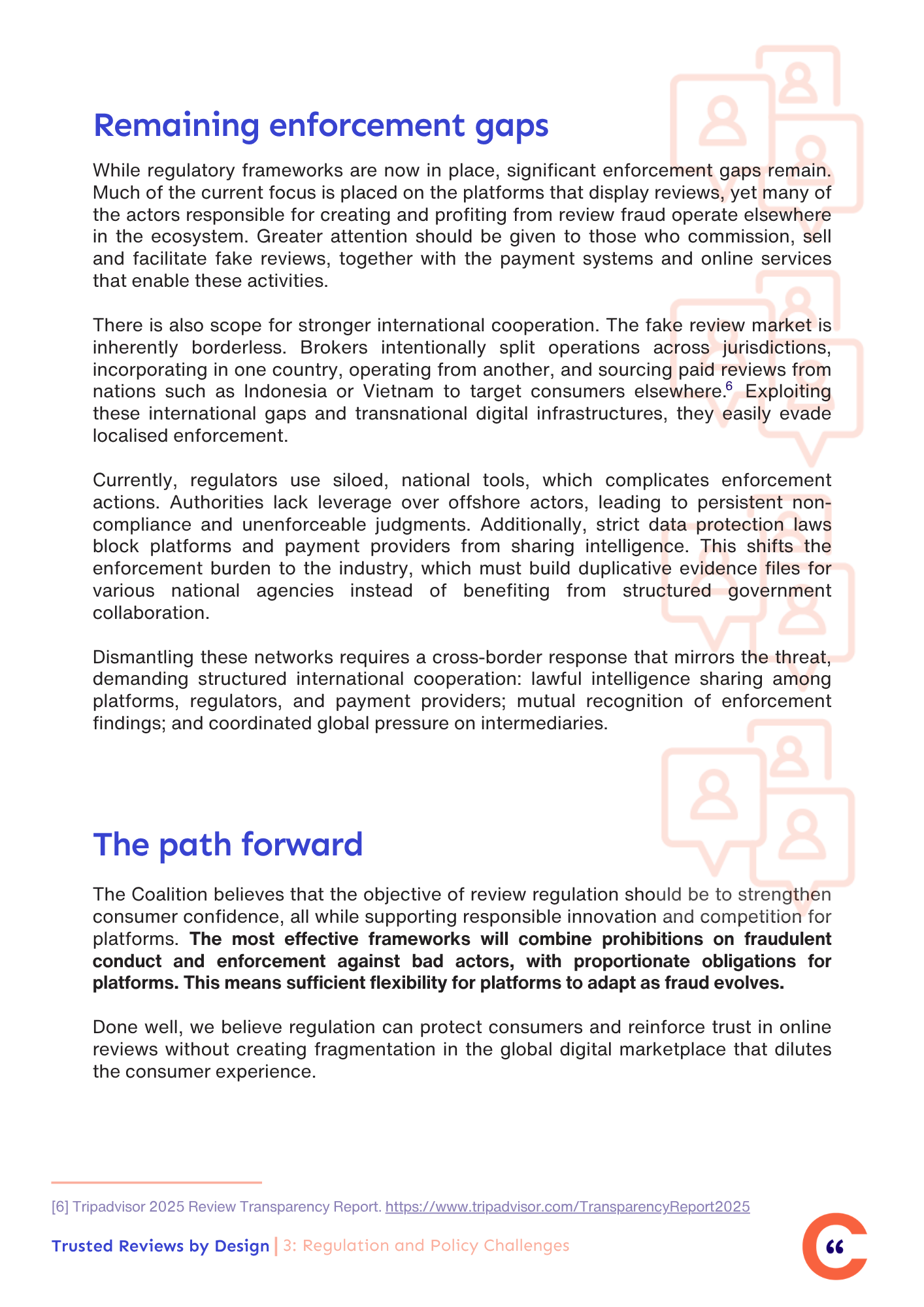
Although many online platforms invest heavily in fighting misuse, review fraud is becoming increasingly sophisticated. Bad actors – those who attempt to breach platform guidelines and mislead consumers and businesses via fake reviews - operate across platforms and jurisdictions, reusing identities, tactics and networks. This makes it challenging for any single platform or regulator to disrupt fraudulent activity.
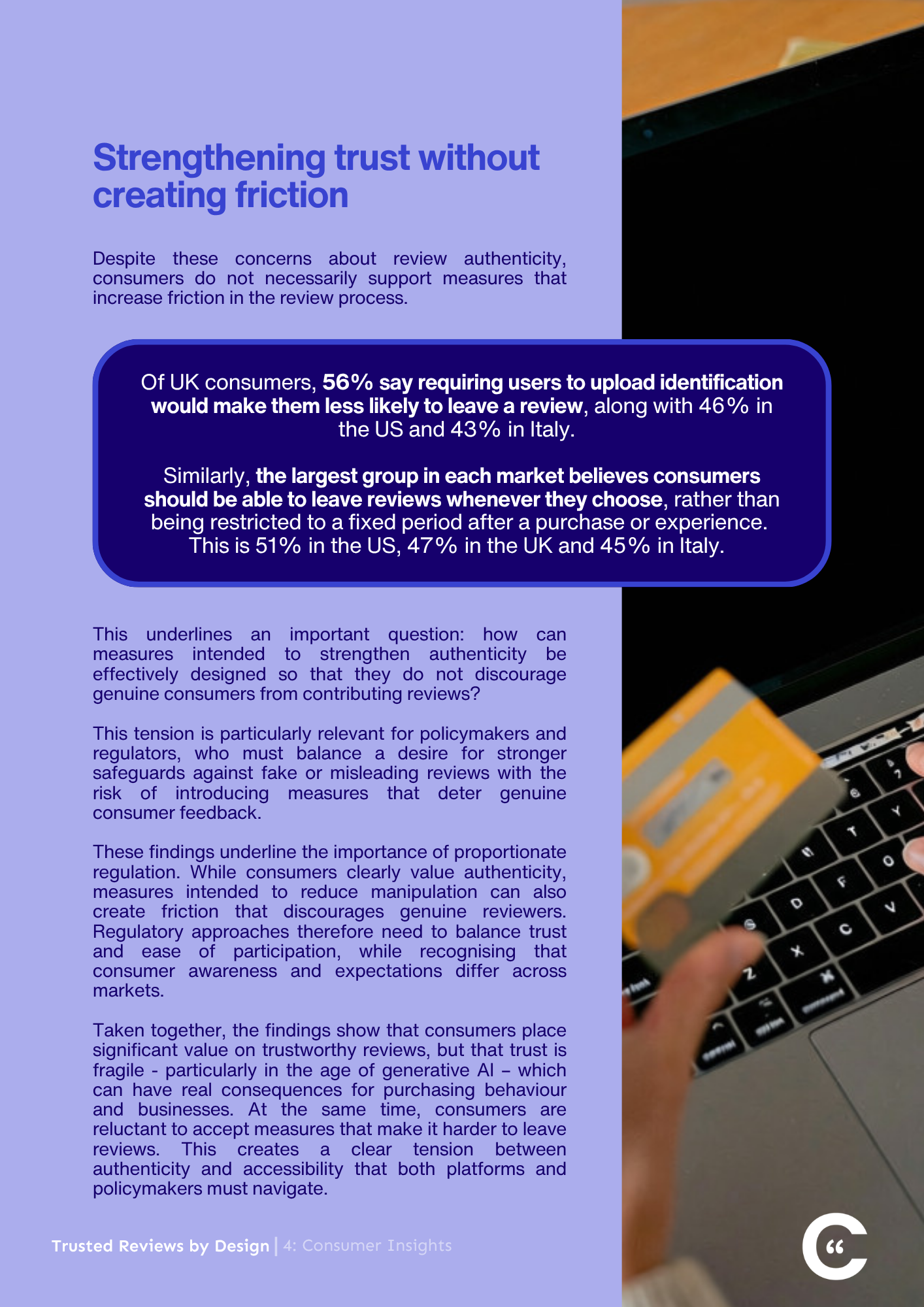
Review and user verification is one of several methods online platforms may use to combat fake content. However, the research also highlights a tension between consumers' desire for authentic reviews and their willingness to accept additional verification measures. In the UK, 56% of consumers say that being required to provide ID would make them less likely to leave a review, alongside 46% in the US and 43% in Italy.
Becky Foley, Executive Committee member of Coalition for Trusted Reviews and VP, Head of Trust & Safety at TripAdvisor said:
“When reviews are fake or manipulated, the consequences go far beyond one misleading rating. Consumers risk making decisions based on information that isn’t genuine, while businesses that play by the rules face an uneven playing field. Over time, this undermines trust across the online marketplace.”
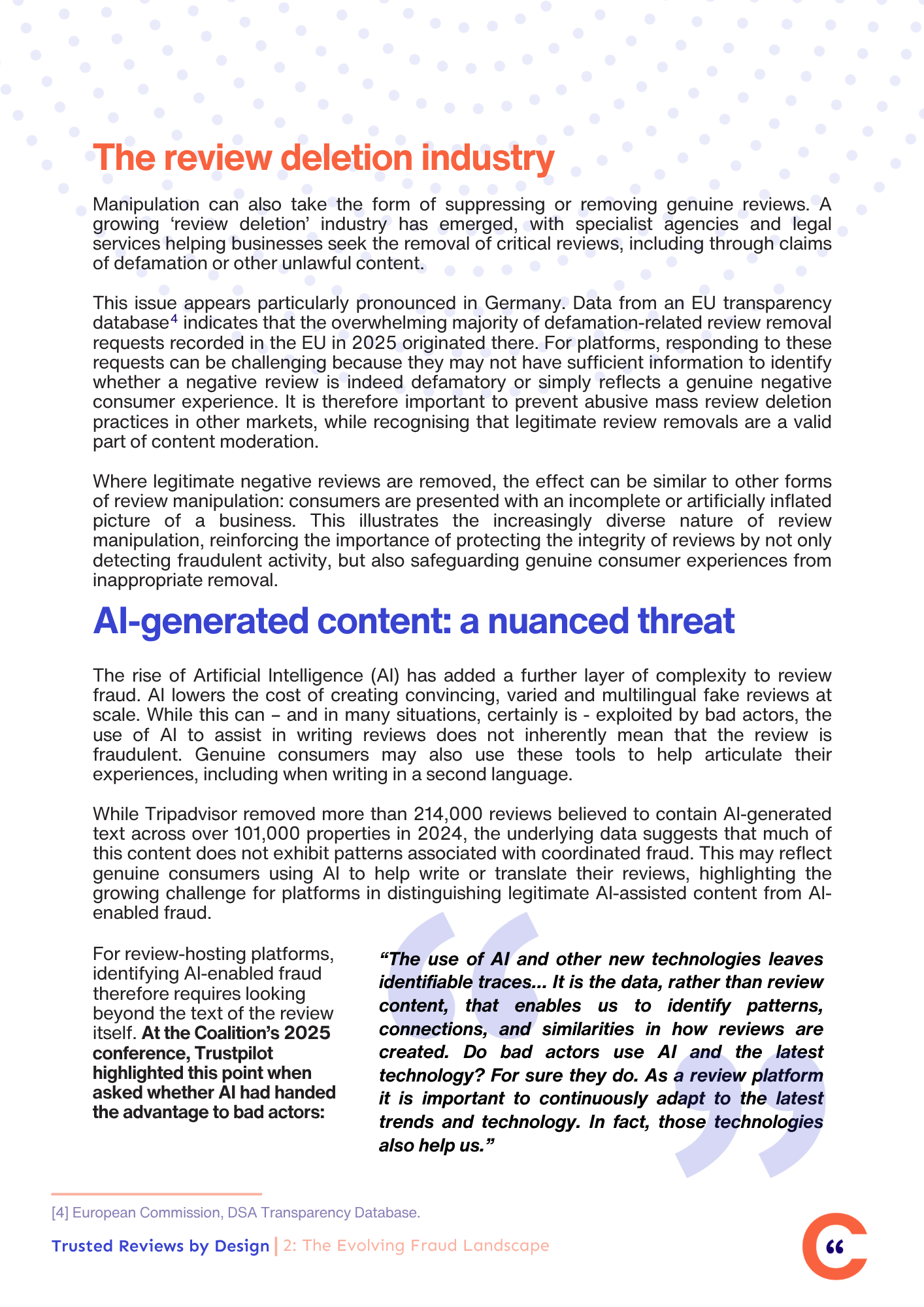
Artificial intelligence (AI) is adding further complexity. The research found that 70% of UK consumers would trust a review less if they knew it had been generated or written with AI assistance, alongside 58% in Italy and 51% in the US. Yet CfTR highlights that the use of AI does not automatically make a review untrustworthy and that online platforms each have their own stance on whether it is aligned with guidelines.
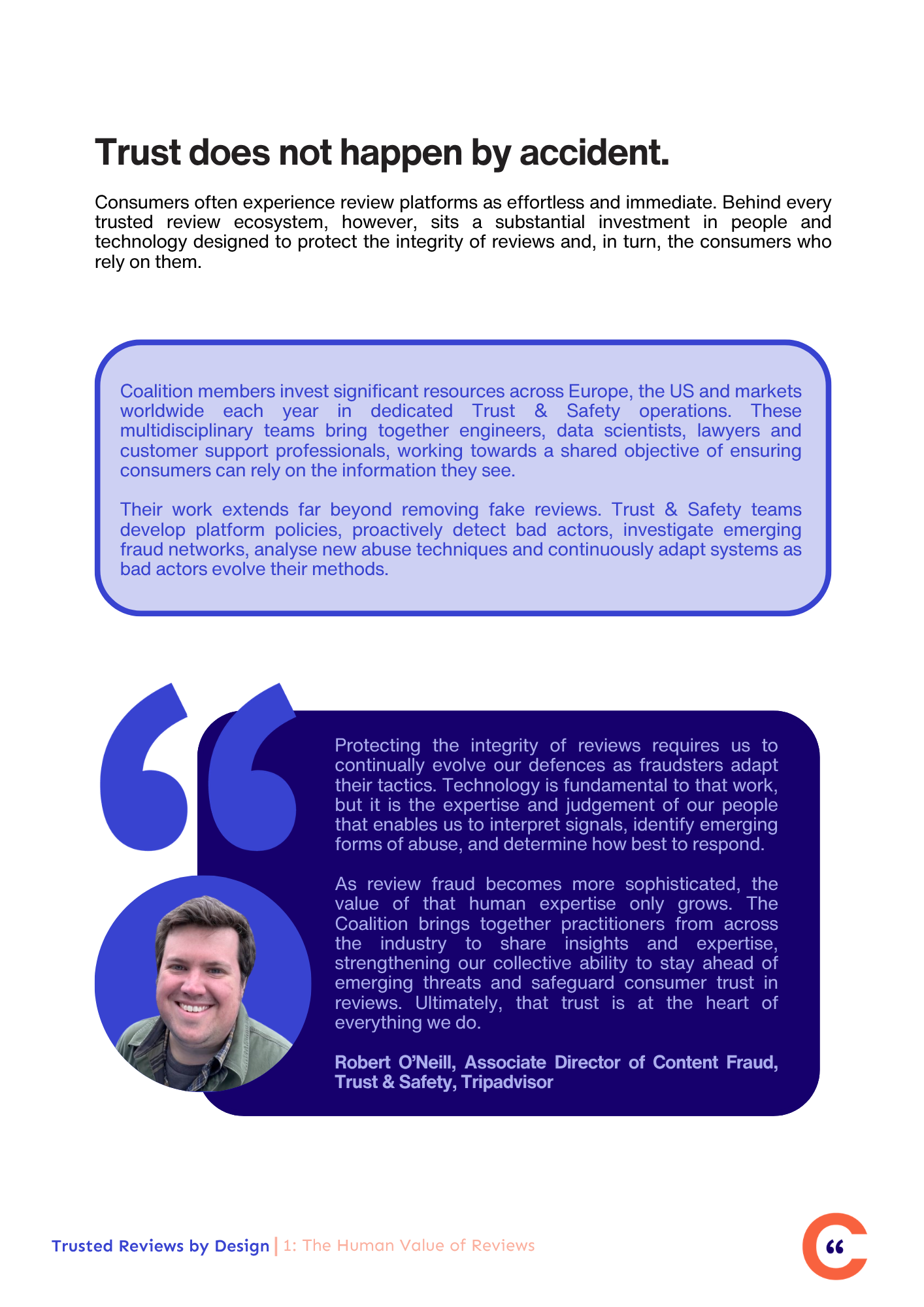
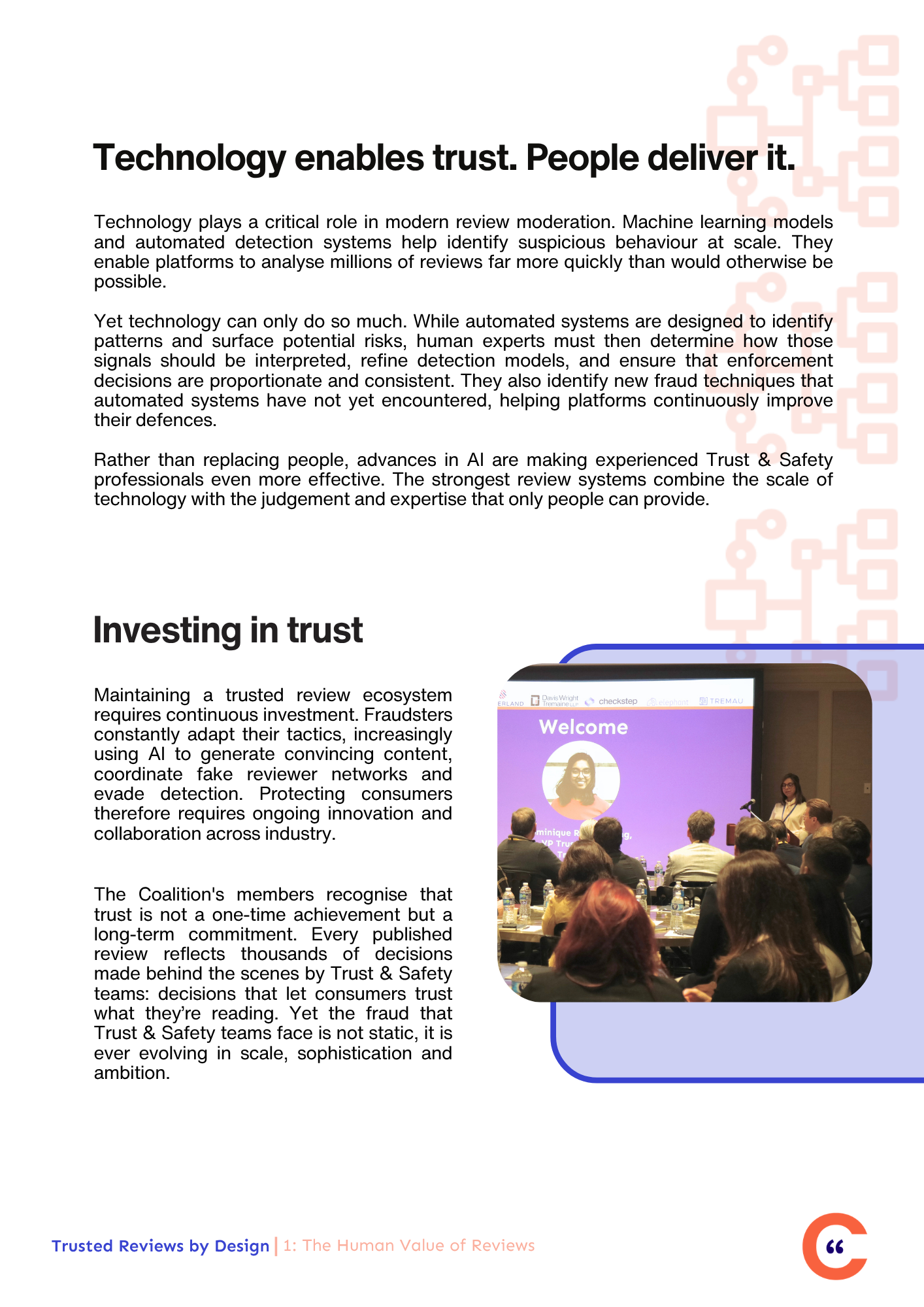
Technology alone cannot tackle review fraud. Continued investment in Trust & Safety teams is critical, combining technology with the human judgement needed to identify emerging threats, interpret complex fraud signals and ensure effective enforcement.
Following this research, the CfTR is asking for a more coherent response from the industry, governments and regulators to tackle review fraud internationally.
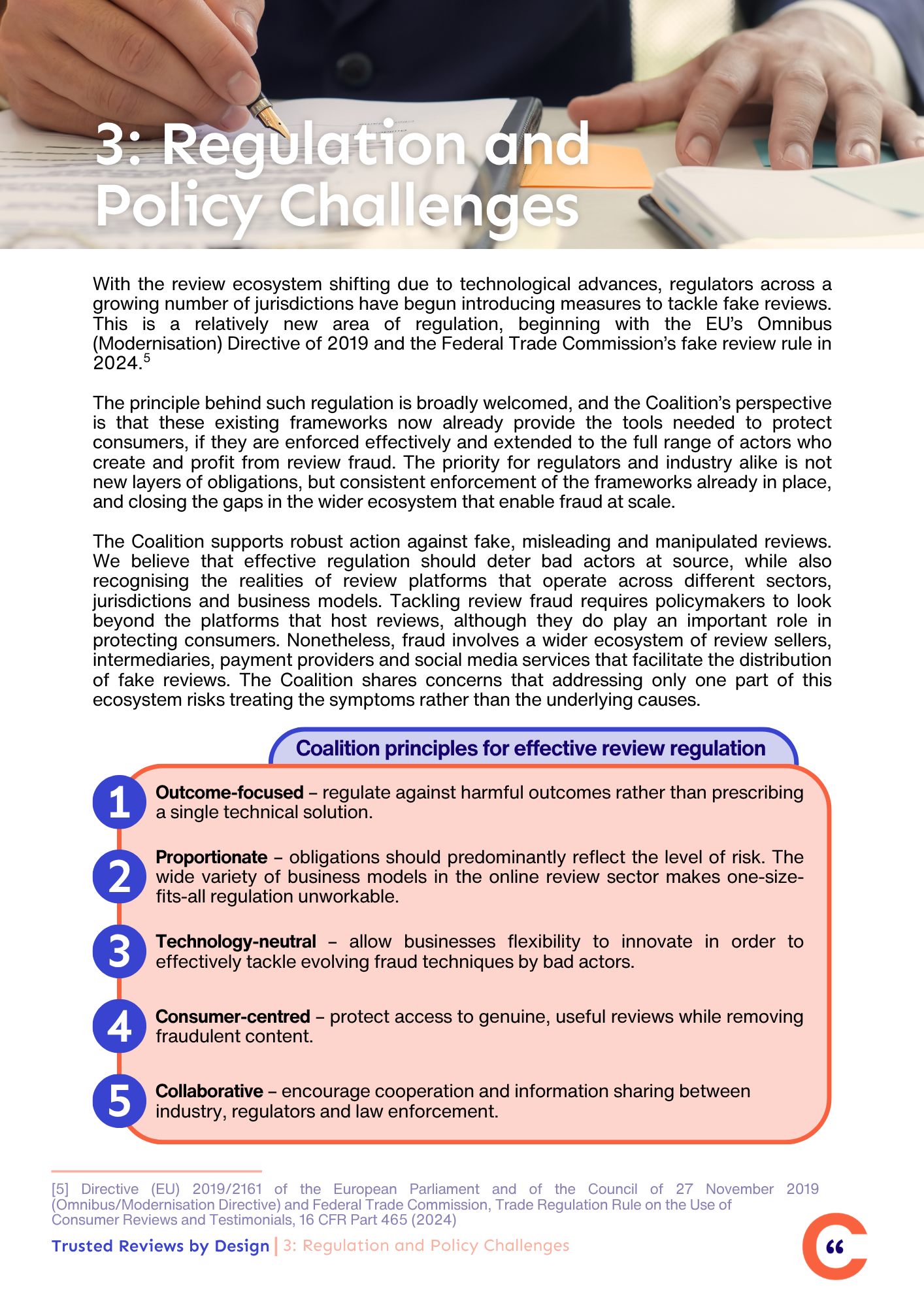
The CfTR’s white paper's key recommendations are:
The industry should adopt robust collective standards of best practice to tackle review fraud.
Regulators should widen enforcement across the entire review ecosystem, to help address review fraud at source.
Regulation should remain outcomes-based and proportionate, balancing consumer trust with the need to minimise friction for genuine reviewers.
Governments should enable responsible data sharing, working with industry to develop operational frameworks with appropriate legal gateways and safeguards.
Regulators should strengthen international cooperation, coordinate investigations and exchanging intelligence across jurisdictions.
CfTR argues that these measures would make it harder for fraudulent actors to exploit gaps, while preserving consumers’ ability to share genuine experiences.
Becky Foley added:
“As bad actors adopt increasingly sophisticated tactics, no single company can tackle review fraud alone. That is why the Coalition is calling on industry, governments and regulators to take coordinated action – sharing intelligence responsibly, building a clearer picture of fraud across the ecosystem and closing the gaps between platforms and markets that fraudsters exploit.”